
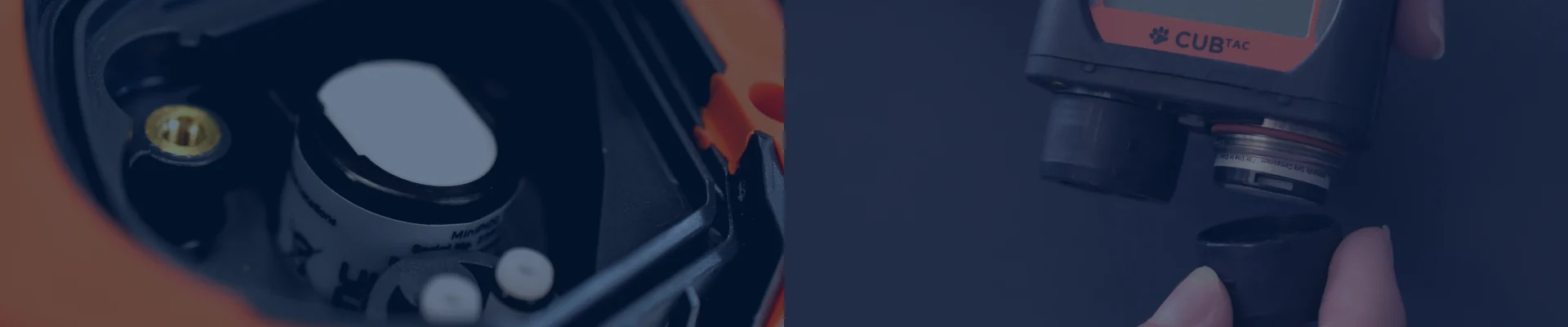
ION Science designs and manufactures the photoionisation detection (PID) technology at the heart of its VOC gas detection instruments at its UK headquarters.
Whether you need a complete monitoring instrument, a replacement sensor or cleaning kit for an existing ION Science product, or a sensor for integration into your own equipment, explore the appropriate route below.
For equipment manufacturers, our dedicated sensor brand, ION SENSE, supplies MiniPID 2 and ION SENSE PID sensors for OEM integration.
Find the right PID solution
PID Gas Detection Instruments
Explore wearable, portable and fixed instruments for your application.
Replacement Sensors & Sensor Spares
Find compatible parts for your ION Science Instrument.
PID Sensors for OEM Integration
Explore sensors and integration support from ION SENSE.
Developed and Manufactured In-House
ION Science develops and manufactures its PID sensors in-house rather than sourcing the core sensing technology from a third party. This allows our teams to apply three decades of PID expertise across the complete detection system—from the ultraviolet lamp and electrode stack to instrument sampling, software, alarms and measurement performance.
Our in-house capabilities include:
- PID sensor research and development
- Ultraviolet lamp and electrode-stack development
- Sensor and instrument design
- UK-based manufacturing
- Testing and quality control
- Calibration and technical support
- Continued technology and product development
By developing both the PID sensor and the complete gas detection instrument, ION Science can design each product around its intended application, measurement range and operating environment.

What is PID Technology?
A photoionisation detector (PID) uses an ultraviolet lamp to ionise detectable gas molecules. This produces an electrical current proportional to the gas concentration present, enabling fast, real-time measurement of volatile organic compounds and selected gases.
Depending on the sensor, lamp and instrument selected, PID technology can measure compounds from very low parts-per-billion (ppm) concentrations through to higher parts-per-million (ppm) levels.
PID technology is particularly valuable where users require:
- Fast, real-time VOC measurements
- Detection across a broad range of compounds
- Measurement at ppb or ppm concentrations
- Portable, wearable or fixed continuous monitoring
- Rapid response and recovery
- Reliable performance in demanding environments
PID Technology Across Our Instrumentation Range
ION Science integrates its in-house PID technology into complete wearable, portable and fixed instruments.
The range supports broad VOC monitoring alongside specialist solutions for portable and continuous benzene measurement.
|
Instrument category |
Monitoring purpose |
Typical applications |
|
Monitor VOC exposure within the wearer’s breathing zone. |
Occupational hygiene, worker safety and personal exposure monitoring |
|
|
Provide fast, flexible VOC measurements across different locations. Tiger XT Select also supports portable benzene measurement when used with benzene pre-filter tubes and can monitor total aromatic compounds in standard operation. |
Site surveys, occupational exposure assessment, environmental monitoring, incident response and benzene monitoring |
|
|
Continuously monitor VOC concentrations at a defined location. Titan 2 provides continuous, benzene-specific monitoring using gas-speciation technology. |
Process monitoring, industrial facilities, refineries, fence-line monitoring and occupied areas |
PID Selection and Lamp Energy Explained
The energy of a PID lamp determines which compounds can be ionised and detected. A compound can generally be detected when its ionisation energy is lower than the energy produced by the lamp.
ION Science instruments are available with different PID lamp options:
|
PID lamp |
General purpose |
|
10.0 eV |
More selective detection of compounds with lower ionisation energies |
|
10.6 eV |
Broad VOC detection across common industrial, safety and environmental applications |
|
11.7 eV |
Detection of selected compounds with higher ionisation energies |
The appropriate lamp will also depend on the target compound, required measurement range, desired selectivity and operating environment.
To check whether a specific gas can be detected by PID, start with the Gas Library to look up your target compound. Then use the TA-02 PID Response Factor Table to check its ionisation energy, assess which lamp may be suitable and find the applicable response factor.
Frequently Asked Questions
Photoionisation detection (PID) technology is used to detect volatile organic compounds and certain inorganic gases. A PID uses an ultraviolet lamp to ionise detectable gas molecules, producing an electrical signal proportional to the total concentration present.
A standard PID does not selectively identify individual compounds when multiple detectable gases are present. However, benzene-specific instruments such as Titan 2 combine PID sensing with additional gas-speciation technology to selectively distinguish and measure benzene.
ION Science PID instruments can detect a wide range of VOCs and selected gases. A compound can generally be detected when its ionisation energy is lower than the energy of the PID lamp. Use the ION Science gas search or TA-02 PID Response Factor Table to check a specific compound.
A 10.0 eV lamp detects a narrower range of compounds with lower ionisation energies. A 10.6 eV lamp detects a broad range of common volatile organic compounds (VOCs). An 11.7 eV lamp can detect additional compounds with higher ionisation energies, but it typically has a shorter service life than the lower-energy options.
A lower-energy lamp can help limit which compounds contribute to the reading. When several detectable compounds are present, a standard PID gives a combined response and cannot identify the individual compounds.
The appropriate instrument depends on the target compound, anticipated concentration and monitoring requirement. Wearable PID instruments monitor worker exposure, portable instruments support surveys and changing locations, and fixed instruments provide continuous monitoring at a defined location.
Yes. ION Science develops and manufactures its PID sensor technology at its UK headquarters in Fowlmere, Cambridgeshire. We use this technology in our wearable, portable and fixed PID gas detection instruments.
ION Science provides complete, ready-to-use gas detection instruments. ION SENSE is the dedicated sensor brand within the ION Science family, providing ION Science PID sensors and integration support to OEMs and manufacturers developing their own equipment.
A PID response factor accounts for the different levels of sensitivity a PID has to different compounds. It allows an instrument reading to be adjusted for a target compound when the PID has been calibrated using a reference gas such as isobutylene. Response factors are available in the ION Science TA-02 PID Response Factor Table.