
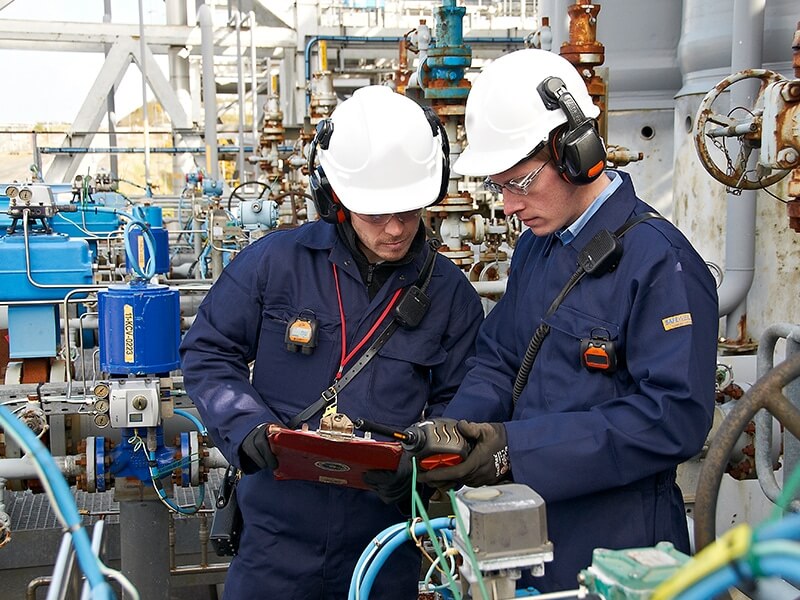
Occupational exposure limits for benzene
Occupational exposure limits for benzene – EU Directive 2017/164/EU5 has introduced indicative occupational exposure limit values (IOELV).
These are health-based, non-binding values, derived from the most recent scientific data available and availability of measurement techniques. For any chemical agent for which an IOELV has been set at EU level, member States are required to establish a national occupational exposure limit (OEL) value. They are required to take into account the EU limit value, determining the nature of the national limit value in accordance with national legislation and current practice.
Member States are required to bring into force the laws, regulations and administrative provisions necessary to comply with this Directive by 21 August 2018 at the latest. IOELVs are established in relation to an 8 hour, time-weighted average (TWA) and, for certain chemical agents, to shorter reference periods, in general 15 minutes time-weighted average also known as short-term exposure limit values (STEL) to take account of the e ects arising from short-term exposure.
In the UK, the Health and Safety Executive (HSE) already publish OELs for a plethora of chemicals, including benzene, in a document known as EH406 Workplace Exposure Limits (WEL). They refer to a WEL value which means the same thing as an OEL.
The EU-wide 8 hour TWA for benzene is currently set at 1 part per million (ppm), equivalent to a concentration of 3.25mg/m3. However, the ECHA review shows that some member states have a significantly lower OEL value which probably indicates the ‘direction of travel’ for the OEL given that the World Health Organisation (WHO) says there is no safe level of exposure. It is also important to note the EU does not recommend an EU-wide benzene STEL value.
By contrast, legislation in the USA exists in the form of Federal Regulation 29 CFR part 19109 and while the legislative framework is less complex than the EU, the limit values vary according to dierent ‘agencies’ plus they all state a value for the STEL.
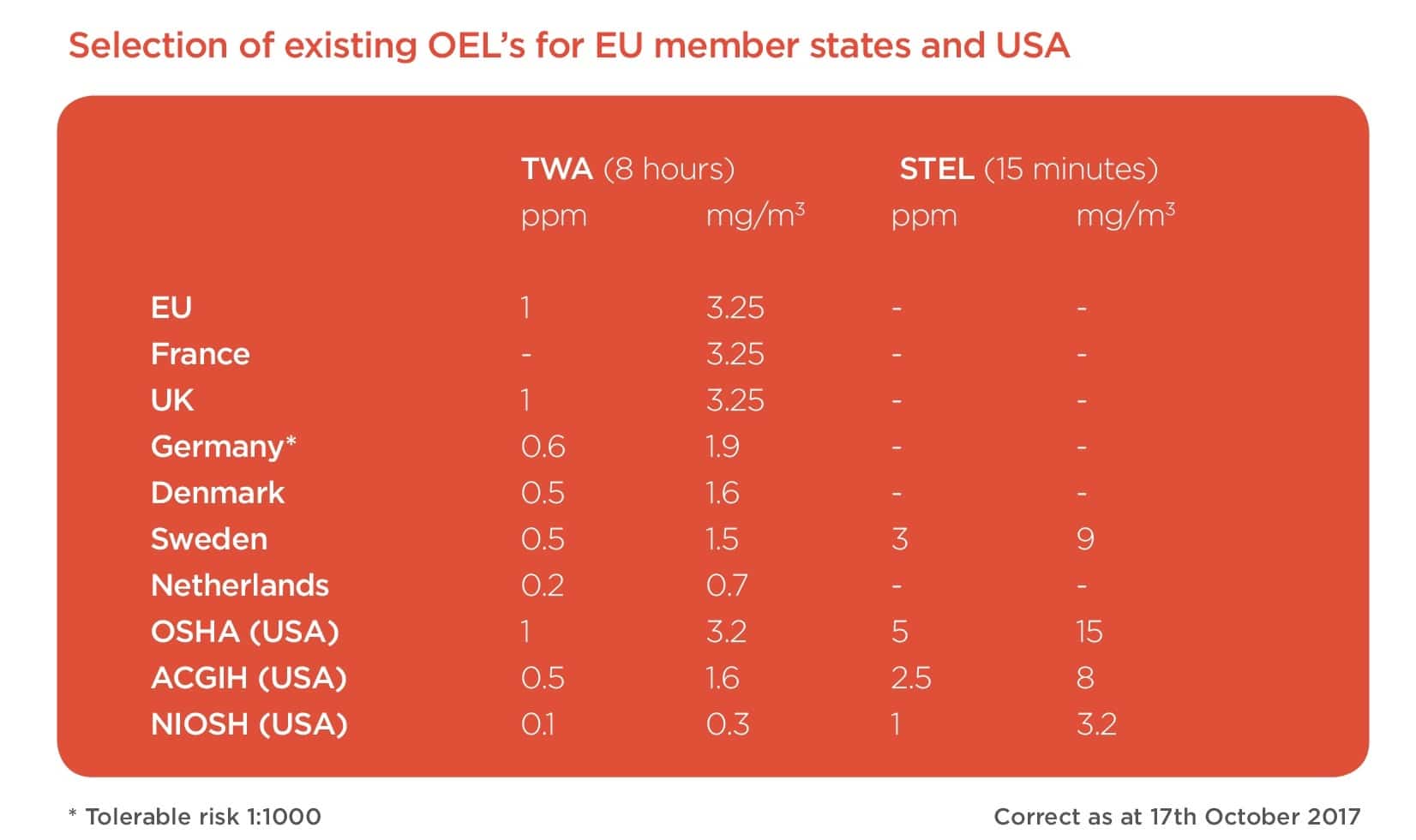
The table shows the existing OELs indicated as an 8-hour TWA and 15-minute STEL (where stated) for selected EU member states and USA.

What are Volatile Organic Compound (VOC) gases?
Volatile organic compound (VOC) gases include a wide range of both natural and synthetic substances. VOCs are chemical compounds – mixtures of more than one element – where one of the elements is carbon. They are described as volatile because they evaporate easily, releasing molecules into the atmosphere.
In some places, notably California (and previously in the USA as a whole), VOCs are known as ROGs or reactive organic gases. This focuses attention on the more important reactive gases, but the distinction causes some confusion and the term VOC is generally preferred. In French, VOCs are known as COV.
Some common gases such as carbon dioxide CO2, carbon monoxide CO, and carbonic acid, are not included in the classification as VOCs because they are not particularly reactive or volatile.
Where are volatile organic compound (VOC) gases found?
VOC gases are present in everyday life and can be harmless, some however, are not and can be hazardous to health and the environment. Solvents used in paints and adhesives, and in cleaning products, are often VOCs. The distinctive smell of some new plastics is the result of the ‘outgassing’ or release of volatile organic compound gases into the atmosphere. Fuels including diesel, petrol, gasoline, heating oil, and aviation fuel are VOCs.
These and other potentially hazardous volatile organic compound gases including benzene, toluene, ethylene, xylene, and formaldehyde require careful monitoring by an appropriate gas detection instrument or sensor. The legal limits on emissions of and exposure to VOC gases vary from place to place, and are set by authorities including the Health & Safety Executive EH40/2005 ‘Workplace exposure limits’ and the Occupational Safety and Health Administration OSHA. One common definition of a VOC, which has been adopted by the EU, World Health Organisation WHO, and others including Health Canada, is a carbon compound with a boiling point below 25oC.
Harmful VOC gases are produced and released to the environment by many human activities, including transportation, manufacturing, printing, and agriculture. They are also produced naturally by plants, but these VOCs are generally harmless.
Hazards to health and the environment
The hazards presented by VOC gases fall into a number of categories. The most volatile substances, sometimes referred to as very volatile organic compounds or VOCs, may present a risk of fire or explosion. Some VOCs including methylene chloride (found in paint strippers and aerosol paints), benzene, and perchloroethylene (dry cleaning fluid) are hazardous to human and animal health or may cause cancer (carcinogenic).
Other VOCs may be serious pollutants, either by directly contaminating the environment or by reacting with sunlight and other gases in the atmosphere – known as photoreactivity – to generate photochemical smog.
When considering VOCs, a distinction may be made between their effect on the outdoor environment and on indoor air quality. Concentrations indoors will often be much higher than outdoors, and VOCs from sources including faulty air conditioning and office equipment are implicated in ‘sick building syndrome’.
Methods of detection
VOC gases play a vital part in many industrial processes and products. VOCs can be detected by specialised gas detection sensors and gas detection instrumentation utilising photoionisation detection (PID) technology.
Factories and other places where VOC gases are routinely present will monitor their environment and surroundings by using fixed VOC gas detectors. These instruments are permanently installed and provide continuous measurement of volatile organic compound gases in the air they sample.
A handheld VOC gas detector, which is a lightweight portable instrument, may be used in conjunction with a fixed VOC gas detector to provide spot measurements. Handheld VOC gas detectors are used to locate and measure VOCs in any place where they might be present, either indoors or outdoors. This may be as the result of a spill, machinery breakdown, or other unexpected event. A handheld VOC gas detector is useful for checking confined spaces such as inside pipework and sewers, in industrial safety and hygiene, and in decontamination monitoring.
Small, lightweight personal VOC gas detectors may be attached to clothing as part of the personal protective equipment (PPE) issued to workers and used to detect gases within the breathing zone.
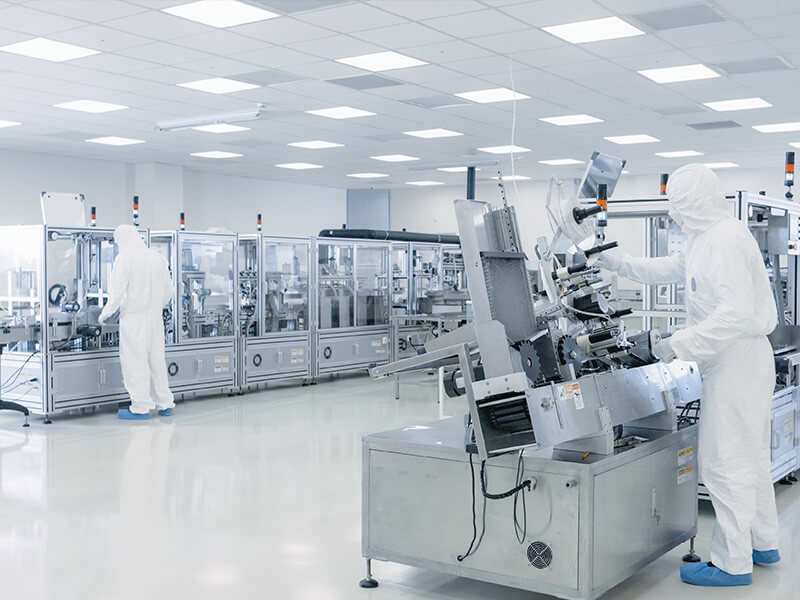
Gases found within Pharmaceutical and Bioanalytical Laboratories
There are a wide variety of gases found within a pharmaceutical or medical laboratory. Many have no taste, colour or smell, which makes it difficult to tell if a gas leak is present. A gas leak from a cylinder or fixed pipe gas system poses a series risk that can cause a potentially fatal incident or hazard within a laboratory environment.
The pharmaceutical industry is one of the world’s fastest growing industries. Most of the sales revenue it generates is then reinvested in the area of research and development of new products. Research and development uses a wide range of speciality gases and equipment. Analytic instruments such as gas chromatographs, liquid chromatographs and spectrometers all rely on the appropriate level of gas delivery to operate effectively.
These pharmaceutical and medical gases are manufactured specifically for the medical, pharmaceutical manufacturing, and biotechnology industries. They are frequently used to synthesize, sterilize, or insulate processes or products which contribute to human health.
Pharmaceutical gases are also inhaled by patients in a technique known as gas therapy. Gases used for human healthcare are strictly controlled by both legislation and industrial standards so as to not impair human physiology.
Gases found within a laboratory
Helium
Helium (He) is a very light, odourless and tasteless gas. It is also one of the 6 noble gases (helium, neon, argon, krypton, xenon and radon), so called because they do not react with other elements and therefore cannot bond with other atoms to form complex compounds. This gives it a strong safety profile and a potential usage in multiple applications. Due to their unreactive status Helium is often used as a carrier gas in laboratories. Helium has many uses beyond its most common one to fill balloons and its role within the pharmaceutical and biotechnology sector is invaluable. It is most widely used in the laboratory in the cooling of magnets inside MRI machines however it is also used across a large range of medical areas including respiratory, cardiology, radiology and cryology functions.
Argon
Argon (Ar) is also a noble gas with non-reactive properties. In addition to its well-known use in neon lights it is also sometimes used in the medical and biotechnology sectors. It is the preferred inert gas for use within Schlenk lines and glove boxes in cases where nitrogen may react with reagents or apparatus and can also be uses is the carrier gas in gas chromatography and electrospray mass spectrometry. In pharmaceuticals and medicine it can also be used in packaging where nitrogen may conflict and also in cryosurgery and in lasers used for vascular welding and correcting eye defects.
Nitrogen
Although not a noble gas like Helium or Argon Nitrogen (N) is also commonly used in pharmaceutical industry due to is relatively non- reactive properties in many different processes and applications. Laboratories primarily to control the atmosphere for highly sensitive equipment and procedures. Nitrogen gas is applied to control oxygen levels, humidity, and temperature in lab equipment including cell incubators, dry boxes, glove boxes, and mass spectrometers.
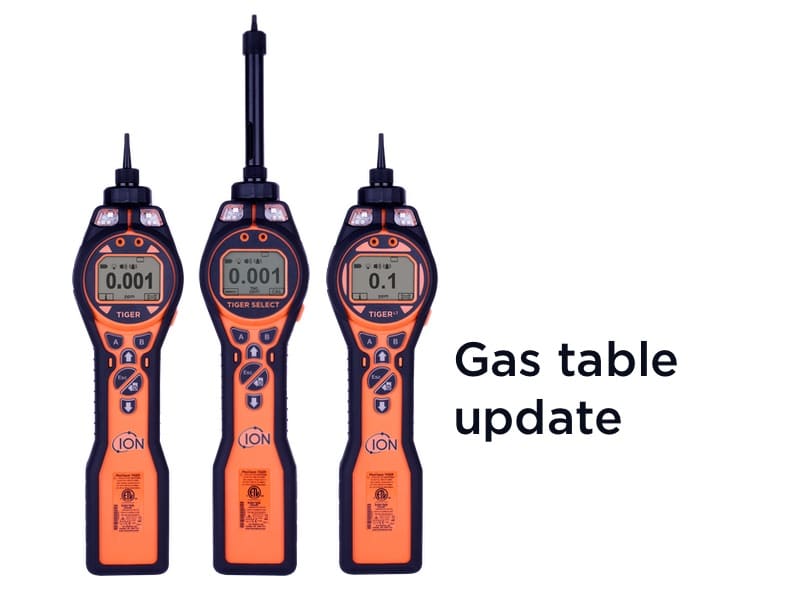
ION Science have recently updated the instrument gas tables for the Tiger and Tiger Select
PID response factors – New versions are available for download from the Ion Science website in English, German and French. The instrument gas tables include many new gases with response factors and personal safety levels for EH40, OSHA, NIOSH, VME and AGW.
About the Tiger
The Tiger handheld VOC detector is a revolutionary handheld gas detection instrument for the rapid, accurate detection of volatile organic compounds (VOCs) within the harshest of environments.
Tiger incorporates Ion Science patented photoionisation detection (PID) sensor technology with humidity resistance and anti-contamination design, proven to dramatically extend run time in the field.
A robust VOC detector Tiger provides a dynamic detection range of 0 to 20,000 parts per million (ppm) with a minimum sensitivity of 0.001ppm (1 ppb), offering the widest measurement range of any other VOC detector on the market.
This handheld VOC detector has the fastest response time on the market of just two seconds and is just as quick to clear down. The instrument can be connected directly to a PC via the USB offering extremely fast data download capabilities.
Tiger has been designed for the safe replacement of batteries in hazardous environments. Long-life rechargeable Li-ion batteries give up to 24 hours of use. Fast battery charging allows the instrument to be fully charged in 6.5 hours, while 8 hours of use can be achieved from 1.5 hours charge.
Low-cost filters and lamps can be easily changed in seconds, minimising instrument downtime. Inexpensive disposable parts mean the Tiger VOC detector has the lowest running costs on the market.
Tiger is a fully upgradeable VOC detector with multiple functions to choose from. A base unit can be upgraded with data logging, health and safety and ppb options, remotely, without needing to be returned to the factory.
Tiger offers simple, one-handed operation for easy VOC detection. Its rugged design and protective, removable rubber boot withstand the harshest environments.
The large, clear back-lit display allows for easy viewing in any light condition. An integrated torch is designed for directing the instrument’s probe into dimly lit areas.
Ready to use on start-up the Tiger VOC detector needs no complex set up procedures via a PC to perform basic functions. Its simple-to-use software features require minimal user training.
Tiger uses the same PID sensor technology found within all Ion Science handheld, personal and fixed VOC detectors. This ground-breaking PID technology is widely used and trusted by major gas detection manufacturers worldwide.