
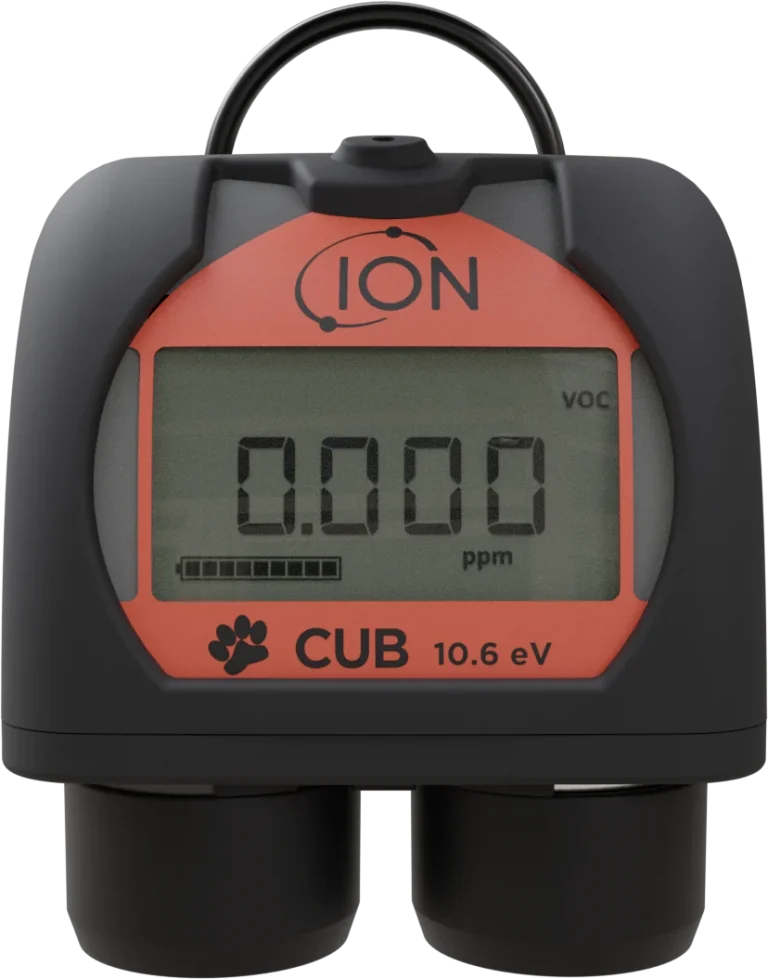
Cub 10.6 eV Wearable PID VOC Detector
Cub 10.6 eV is a wearable photoionisation detector (PID) for personal exposure monitoring across a wide range of volatile organic compounds (VOCs).
View product: Cub 10.6 eV Wearable PID VOC DetectorDomino Printing Sciences, a US manufacturer specialising in industrial ink manufacturing, introduced the Cub 10.6 eV to better understand employee exposure to volatile organic compounds (VOCs) during day-to-day production. VOC monitoring in industrial ink manufacturing gave the team real-time insights into exposure levels, helping them identify higher-risk activities and make more informed decisions to support workplace safety.
| Industry | Manufacturing and Industrial Processing |
| Application | Personal VOC monitoring in industrial ink manufacturing |
| Products | Cub 10.6 eV |
| Gas(es) | VOCs |
| Technology | PID |
| Location | USA |
| Challenge | Monitor employee solvent exposure for process improvement |
| Solution | Personal PID monitoring |
| Outcome | Improved visibility of exposure hotspots |
Solvent-based materials are an essential part of industrial ink manufacturing, but they must be carefully managed to minimise potential exposure risks. Before introducing personal VOC monitoring, Domino had limited visibility of employee exposure during some cleaning and handling activities, making it difficult to identify where higher levels of exposure could occur.

Domino selected the ION Science Cub personal VOC monitor to provide employees with continuous, real-time insight into VOC exposure during solvent-based processes. Effective VOC monitoring in industrial ink manufacturing was essential to help the team understand where exposure levels could vary throughout daily operations and identify opportunities to improve workplace controls.
Its compact, lightweight design meant the Cub could be worn comfortably throughout the working day, allowing exposure levels to be monitored during normal activities without disrupting production. By using the Cub during tasks such as cleaning and solvent handling, Domino was able to build a clearer picture of how exposure changed across different processes.
Monitoring solvents including methyl ethyl ketone, acetone and ethanol helped the team identify where higher exposure could occur and where additional controls or improvements could be considered. Rather than relying on assumptions, Domino could make informed decisions based on real-time exposure data, supporting a more proactive approach to employee health and safety.
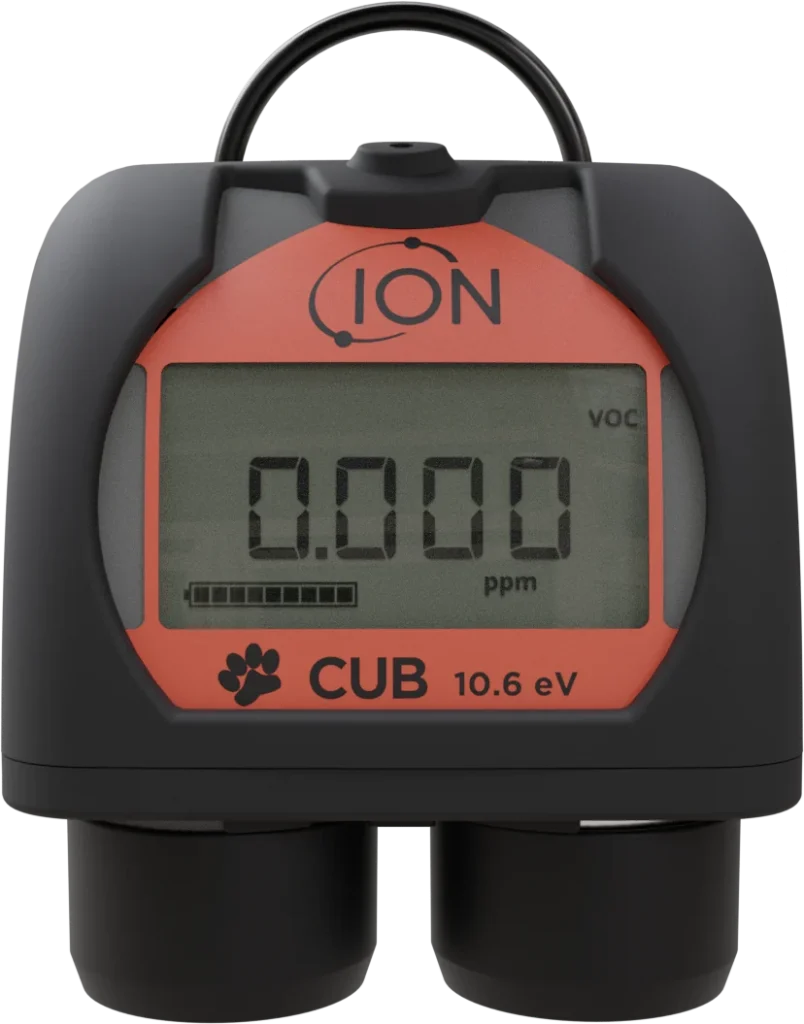
| Lightweight Personal Monitoring | Data Logging | Battery Life Optimised for Long Shifts |
|
With a sturdy clip and weighing just 111 grams, Cub is lightweight and unobtrusive to wear, easily attaching to lab coats, coveralls and high-visibility safety jackets. Designed for all-day use, it provides comfortable personal VOC monitoring without disrupting everyday activities. |
Capture and review VOC exposure data over time with built-in data logging. Download recorded measurements to analyse exposure trends, identify higher-risk activities and support informed workplace safety decisions. | Cub’s 12-hour battery life is essential for worker use during long shifts. When worker exposure exceeds pre-set limits the instrument’s audible, vibrating and flashing LED alarms alert you to the gases present. |
By introducing the ION Science Cub personal VOC monitor, Domino gained greater visibility of employee exposure levels during solvent-based processes, helping the team make more informed decisions around workplace controls. Continuous, real-time monitoring provided a clearer understanding of how exposure varied across different activities, including cleaning processes where additional improvements could be considered.
The data collected allowed Domino to move from assumptions to evidence-based decision making, identifying where targeted actions could be taken to further support employee safety. The Cub’s lightweight, wearable design enabled practical monitoring during normal operations, while its certification for use in potentially flammable atmospheres provided confidence that it was suitable for the working environment.
By improving visibility of VOC exposure across daily activities, Domino strengthened its approach to VOC monitoring in industrial ink manufacturing, supporting more proactive risk management and helping ensure workplace controls could be focused where they were needed most. This provided the team with greater confidence in their monitoring strategy and helped support ongoing employee health and safety improvements.
Monitoring VOC exposure helps organisations understand where employees may come into contact with volatile organic compounds (VOCs) during their work. Personal monitoring provides insight into how exposure levels change throughout different tasks and working environments, helping identify higher-risk activities and opportunities to improve workplace controls. By using accurate exposure data, businesses can make more informed decisions to support employee health and safety.
Photoionisation detection (PID) technology provides highly sensitive detection of many VOCs at low concentrations, making it ideal for monitoring potential exposure risks. Unlike some traditional detection methods, PID sensors can provide fast, real-time readings, helping users identify changes in VOC levels as they occur. This makes PID technology particularly useful for applications where understanding exposure patterns and identifying sources of VOCs is important.
The ION Science Cub personal VOC monitor range can detect a wide range of volatile organic compounds, including solvents commonly found in industrial environments. These include substances such as methyl ethyl ketone (MEK), acetone, ethanol, benzene, toluene and xylene. The specific VOCs detected will depend on the sensor configuration and the ionisation potential of the compounds being monitored.
Personal monitoring measures exposure directly within an employee’s breathing zone, providing a more accurate understanding of the VOC levels they experience during their working activities. Area monitoring, by comparison, measures conditions in a fixed location and provides information about the overall environment rather than individual exposure. Personal monitoring is particularly useful for identifying exposure variations between tasks, locations and working practices.
Yes. The Cub personal VOC monitor is certified for use in potentially flammable atmospheres, making it suitable for a range of hazardous workplace environments where VOC monitoring is required. Its compact, wearable design allows employees to carry out normal activities while monitoring exposure levels in areas where flammable gases or vapours may be present.
Exposure hotspots can be identified by using real-time monitoring data to understand when and where VOC levels increase. By reviewing recorded measurements alongside specific workplace activities, teams can identify tasks, processes or locations associated with higher exposure levels. This allows organisations to focus improvements, such as additional controls or process changes, where they will have the greatest impact.
ION Science works with a global network of authorised distributors who can provide product advice, support and purchasing assistance. Find your nearest distributor to discuss Cub and other personal VOC monitoring solutions for your application.
Whether you are looking to improve workplace exposure monitoring, introduce personal VOC detection or understand the most suitable solution for your application, our team can help.

Find out how RISE Research Institutes of Sweden uses the ION Science Tiger XTL to monitor gases during battery-cell research and testing.
Discover more
Discover how the National Oceanography Centre uses ION Science Cub personal PID detectors to monitor potential VOC exposure and support safer laboratory working practices.
Discover more
Port of Antwerp, one of Europe’s largest integrated petrochemical hubs, equipped employees with ION Science Cub personal PID detectors to strengthen personal VOC monitoring…
Discover more