
Every year on April 7th, the world comes together to celebrate World Health Day, an initiative by the World Health Organization (WHO) that provides an invaluable opportunity to come together and advocate for effective, sustainable health policies and practices.
This year, the theme “My Health, My Right” underscores the fundamental principle that everyone, regardless of their background or circumstances, has the right to live in environments conducive to good health.
In a world constantly grappling with various health challenges, from infectious diseases to environmental pollution, this theme serves as a reminder of the importance of prioritising individual health rights. It emphasises the need for governments, organisations, and individuals to work collaboratively to ensure that health is treated as a fundamental human right, not a privilege.
ION Science exemplifies this commitment to promoting health rights with a dedication to protecting lives and preserving the environment, aligning closely with the key theme of World Health Day 2024 and beyond.

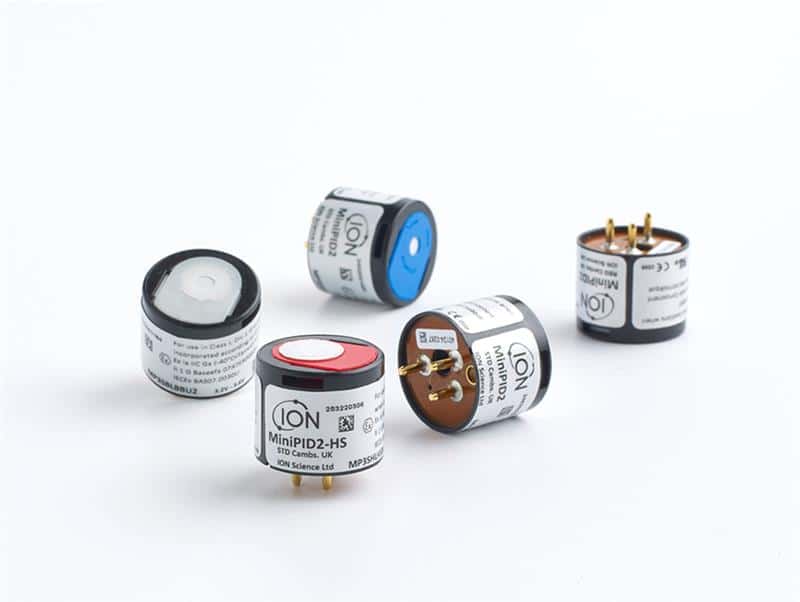
Cleaner Air: Ensuring cleaner air is essential for safeguarding public health, and our sensing technology plays a vital role in this endeavour. ION Science’s range of MiniPID sensors is widely recognised as the best available PID sensors, thanks to our industry-leading sensitivity, reliability, and accuracy in VOC detection. By improving the technology available, it’s possible to better monitor emissions that negatively impact health and the environment. ION Science’s MiniPID sensor technology is ideal for air quality and emissions monitoring purposes, due to the patented ‘Fence Electrode Technology’ found in all ION Science MiniPID sensors, to eliminate false positives. The Fence Electrode guards the sensing electrodes against short circuits, and false negatives are also minimised through a combination of advanced electrode geometry and moisture filtering.
The three MiniPID sensor variants that are most suitable for air quality monitoring, to support cleaner air are:
MiniPID 2 PPB Sensor: Sets the standard for low-end parts per billion (ppb) sensitivity, ensuring precise detection of volatile organic compounds (VOCs) in various environments. With its wide dynamic range, this sensor excels in measuring indoor and outdoor air quality across diverse settings, providing accurate data for informed decision-making.
MiniPID 2 HS Sensor: Offers unrivalled sensitivity that stands out as the epitome of sensing technology, setting the bar as the most sensitive VOC sensor available. Tailored for high-sensitivity applications, this sensor enables sub-parts per billion (ppb) measurements, offering unparalleled precision in detecting volatile organic compounds (VOCs) in diverse environments.
MiniPID 2 10.0 eV Sensor: Enables targeted detection establishing it as the ideal solution for environments demanding precise measurement of highly toxic VOCs like benzene, toluene, ethylbenzene, and xylene. With its specialised focus on selective detection, this sensor empowers users to pinpoint and monitor specific volatile organic compounds, ensuring enhanced safety and risk management in targeted applications.
Utilising MiniPID sensors alongside advanced gas sensing technology has proven to be a powerful approach to monitoring air quality and emissions, crucial for safeguarding both human health and the environment. ION Science remains steadfast in its dedication to saving lives and conserving the environment by providing innovative gas-sensing solutions to enhance air quality monitoring and preservation efforts.
Safer Work Environment: In the realm of safeguarding workplaces from hazardous levels of toxic and explosive gases, the creators and innovators behind gas detection instruments and systems play and imperative role.
Safeguarding workplaces is paramount to prevent dire consequences resulting from the failure to protect work environments. Professionals play a crucial role in upholding organisations’ duty of care and ensuring the safety and well-being of employees.
In response to this imperative need for reliability and precision, ION Science remains dedicated in its commitment to providing superior-grade gas detection and sensing technology. Our solutions stand as the epitome of reliability on a global scale, empowering organisations to fulfil their duty of care with confidence, knowing they have the most precise and reliable sensing technology at their disposal.
Effective monitoring is essential for promptly identifying risks to both industrial facilities and the workforce. Accurate and dependable measurements serve as the cornerstone of this process, enabling operators to assess potential hazards and take proactive measures to mitigate them. Allowing organisations to address identified issues swiftly and effectively. Additionally, it enables operators to evaluate the efficacy of implemented measures, ensuring continuous improvement in workplace safety standards.
Our fixed gas monitoring products, such as the Falco, are designed to provide comprehensive monitoring capabilities across various industrial settings. The Falco can detect a wide range of hazardous gases, including volatile organic compounds (VOCs), hydrogen sulphide (H2S), and carbon monoxide (CO), among others. With real-time data monitoring and customisable alarm settings, employers can promptly respond to potential gas leaks or unsafe conditions, ensuring the safety of their site and workforce.
In addition to fixed gas monitors, our wearable gas detection devices, including the Cub and the ARA (O2 Single Gas Detector , SO2 Single Gas Detector, HS2 Single Gas Detector & CO Detector) range, offer wearable safety solutions for individual workers. The Cub is a portable PID VOC monitor that can be worn by workers to continuously monitor their immediate environment for harmful gases. Its compact design and intuitive interface make it ideal for personal use, providing peace of mind and enabling proactive safety measures.
By combining fixed gas monitoring solutions like the Falco with wearable devices such as the Cub and ARA range, employers can create a layered approach to gas detection, enhancing overall workplace safety. Our advanced gas detection technology not only protects workers from immediate hazards but also contributes to a culture of safety and accountability within the organisation. Ensuring employers can confidently provide safer work environments, safeguarding the health and well-being of their employees.
Commitment To Sustainability: At Ion Science, our commitment to sustainability extends beyond providing innovative solutions for health and safety. We recognise the importance of minimising our environmental footprint and actively work towards sustainable practices in our operations and product development.
From implementing energy-efficient manufacturing processes to reducing waste and emissions, we strive to minimise our impact on the environment. Our dedication to sustainability is evident in initiatives such as our ISO 14001 certification, which ensures that environmental management is integrated into our business processes.
Our products are designed with longevity and efficiency in mind, promoting resource conservation and reducing the need for frequent replacements. For example, our gas detection instruments are built to withstand harsh conditions and undergo rigorous testing to ensure durability, thereby reducing waste and contributing to a circular economy.
In addition to our internal efforts, we support sustainability initiatives within the communities we serve. Whether through charitable donations, volunteer programs, or partnerships with environmental organisations, we aim to make a positive impact beyond our business operations.
Whilst we continue our journey towards sustainability, we remain committed to innovating responsibly and prioritising the health of both people and the planet. Together, we can build a more sustainable future for generations to come.
Want to Learn More?
As we commend World Health Day 2024, it’s imperative to recognise the interconnectedness of individual health, environmental health, and occupational health. By embracing the theme “My Health, My Right,” and actively pursue cleaner air, and safer workplaces, we can create a world where everyone can enjoy the basic human right to health and well-being.
Initiatives like World Health Day serve as important reminders of the ongoing global efforts to prioritise health rights for all individuals. Through collaborations between organisations like ION Science and initiatives led by WHO, we can strive towards a healthier, more equitable future for generations to come.
If you would like to learn more about World Health Day 2024, click here.

ION Science wins Queen’s Award for Enterprise: Innovation for MiniPID Sensors
ION Science is delighted to announce it has won the prestigious Queen’s Award for Enterprise in the category of Innovation, for its pioneering MiniPID sensors. The award is the highest recognition of business excellence across Britain and endorses the commercial success in respect to the innovative technology. ION Science’s industry-leading PID (photoionisation detection) technology, offers unparalleled VOC detection.
The achievement of the Queen’s Award for Innovation reaffirms the quality, reliability and success of the MiniPID sensor. And just how dedicated ION Science is to developing and producing new technologies. Prior to the development of the MiniPID sensor range, VOC sensors often suffered from short operational life, unreliable technology, and failed in the face of challenging environmental conditions.
The MiniPID sensor addresses all these issues and more, highlighting why it is the market leader in quality and standards for all VOC sensors. Able to withstand relative humidity up to 99% (non-condensing), temperatures of -40 to +65 °C, and with an anti-contamination design, the MiniPID range offers 10,000 hours of reliable detection, ideal for long-term monitoring. Sensitivity for VOC measurement can be conducted in ppm (parts per million) or ppb (parts per billion), over a wide range or across a small area. ION Science’s sensors can be used to detect up to 950 different compounds, many of which pose a serious threat to human health and life if people are exposed.
Duncan Johns, Managing Director of ION Science, said of the win: “It’s wonderful to see the hard work of all the staff here at ION Science recognised with the success of the Queen’s Award. As an organisation we are always striving to achieve the next level of innovation in technology, which is exactly represented by the MiniPID sensor range. We’re looking forward to the future of ION Science and the next steps with our award-winning sensors.”
Dr Peter Morris, head of the Sensors Product Business Unit at ION Science, also spoke of the MiniPID: “Achieving this outstanding level of recognition for the MiniPID sensor is a fantastic result for the Sensors team. Many of us have worked at ION Science for decades and seen the development of the MiniPID since its inception in 2007. Being able to have the affirmation of the MiniPID sensor as an ‘Innovation’ by the Queen’s Award for Enterprise is a great highlight and we’re very proud to receive it.”
Across the globe today, MiniPID sensors can be found in many applications, including oil rigs, gas refineries, pharmaceutical manufacturing plants, semiconductor factories, laboratories, nuclear facilities, air quality monitoring and more, protecting the health and safety of workers, public and the environment.
MiniPID sensors represent a monumental step forward in protecting staff, but also in ensuring product quality and keeping workplaces as healthy as possible. The advanced VOC detection capabilities mean that no matter what application, environment, or compounds, MiniPID sensors exceed the customer need and delivers high quality, reliable results.

ION Science’s range of MiniPID sensors are now available to buy directly from the award winning manufacturer – contact them today to find out more: https://ionscience.com/en/sensors-and-components/oem-sensors/
For press enquiries please contact: Hannah Albone hannah.albone@cogent.co.uk or 07483047567, alternatively contact David Leatham David.leatham@cogent.co.uk or 07483 071 833.
To find out more about ION Science and our award winning innovative MiniPID technology!
Please complete the form below and a member of our team will contact you shortly.

How fixed gas detection solutions are supporting World Day for Safety and Health at Work
The International Labour Organisation (ILO) marks its World Day for Safety and Health at Work on 28th April 2022. The spotlight on providing safe and healthy places to work has become more prominent in recent times, particularly as working practices emerged and evolved rapidly as part of the COVID-19 pandemic.
World Day for Safety and Health at Work is designed as an initiative, aimed at encouraging people and businesses to leverage an effective occupational health and safety (OHS) system to reduce risk and improve working conditions for all. As a result ILO is exploring the topic of participation and social dialogue in creating a positive safety and health culture.
ION Science is committed to protecting lives and preserving the environment with technologically advanced gas detection instrumentation. As a leading OEM in the development, manufacture, and supply of PID (photoionisation detection) volatile organic compound (VOC) gas detectors. ION Science has been working to keep workers and environments safe for over 30 years. A key part of ION Science’s portfolio is fixed gas detectors, which can play a vital role in a organisations occupational health and safety approach.
In industrial facilities where hazardous substances are part of the daily routine, fixed gas detectors are used to protect employees, for site-safety (assets) and the environment. Their purpose is to control gas-related risks and provide continuous monitoring for the prevention of explosive gas leaks or overexposure to toxic gases. The right and reliable fixed gas detection system can prevent and limit the impact of a potential gas leak.
Fixed detectors can be classified and approved for use in ATEX-zoned hazardous areas or what are deemed safe areas. That choice will usually be based on a gas hazard survey and/or a DSEAR report depending on the site and application. Once a working area has been identified as hazardous it must be classified into a zone based upon the frequency and persistency of the potentially explosive atmosphere. This will help to determine the controls needed on potential sources of ignition that may be present in the area:
- Zone 1 hazardous areas are classified as a working area where the presence of explosive gas is likely to occur during normal working conditions.
- Zone 2 hazardous areas are classified as working areas in which explosive gas is not likely to occur during normal operation and if it does it would not be for an extended period of time.
ION Science’s two main fixed gas detectors are the Falco and Titan. The Falco fixed gas detector is available as either a pumped or diffusive model. The Falco is intrinsically safe and ATEX certified making it approved for use in ATEX-zoned hazardous areas. It does not require a hot work permit, and only requires annual maintenance. Falco gas detectors are designed with Typhoon technology, making it able to withstand exceptionally harsh environments, including 0-100% relative humidity and condensing humidity, and temperatures from -40 to +50 °C without any compromise in performance. When you have the right gas detection system in place, your workers and site stay safe, and work continues smoothly.
Titan is a benzene-specific fixed gas detector, making it ideal for use in petrochemical applications. Benzene poses a serious health risk, even at low concentrations, so monitoring is essential for safe working environments. ION Science’s Titan detector is the only continuous benzene-specific fixed gas detector on the market, offering end users a unique ability to monitor benzene concentrations 24/7 to ensure any risk can be mitigated. With fast and accurate monitoring down to 0.1 ppm, the Titan is designed with worker health and safety in mind, alongside reliable, accurate benzene monitoring. It is also certified to ATEX, IECEx, UL and CSA standards for total reliability.
This World Day for Safety and Health, it is important to understand the role that technology can play in improving approaches to health and safety. With greater awareness, improved initiatives, better prevention tactics and a willingness to leverage effective occupational health and safety, the likelihood of improving working conditions for all is possible. ION Science is proud to offer fixed gas detectors which can aid in the detection and prevention of exposure to harmful VOCs and play a part in supporting worker health and safety around the world.
To find out more about World Day for Safety and Health at Work, please visit: https://www.ilo.org/global/topics/safety-and-health-at-work/events-training/events-meetings/world-day-safety-health-at-work/WCMS_836801/lang–en/index.htm
For press enquiries please contact: Hannah Albone hannah.albone@cogent.co.uk or 07483047567, alternatively contact David Leatham David.leatham@cogent.co.uk or 07483 071 833.
To find out more about how ION Science can support World Day for Safety & Health at Work with fixed gas detection solutions.
Please complete the form below and a member of our team will contact you shortly.