

Are you prepared for upcoming benzene workplace exposure limit (WEL) changes?
In an effort to reduce acute and chronic illness caused by exposure to harmful substances, many governing bodies are making changes to workplace exposure limits (WELs). WELs have been key in protecting the lives of workers, and with the upcoming limit changes, it shows we are heading in the right direction when it comes to the safety of both the workforce and the environment.
What are the main changes to Workplace Exposure Limits Surrounding Benzene?
Many countries are planning to reduce WELs for Benzene, and some of these plans have already been approved for implementation very soon. Countries in the EU, for example, are being guided by new WELs which will come into effect as early as April 2024, where the TWA (8 hours) for benzene will be reduced from 1ppm to 0.5ppm under guidance from the EU Directive. This TWA will be slashed further in April 2026 to just 0.2ppm.
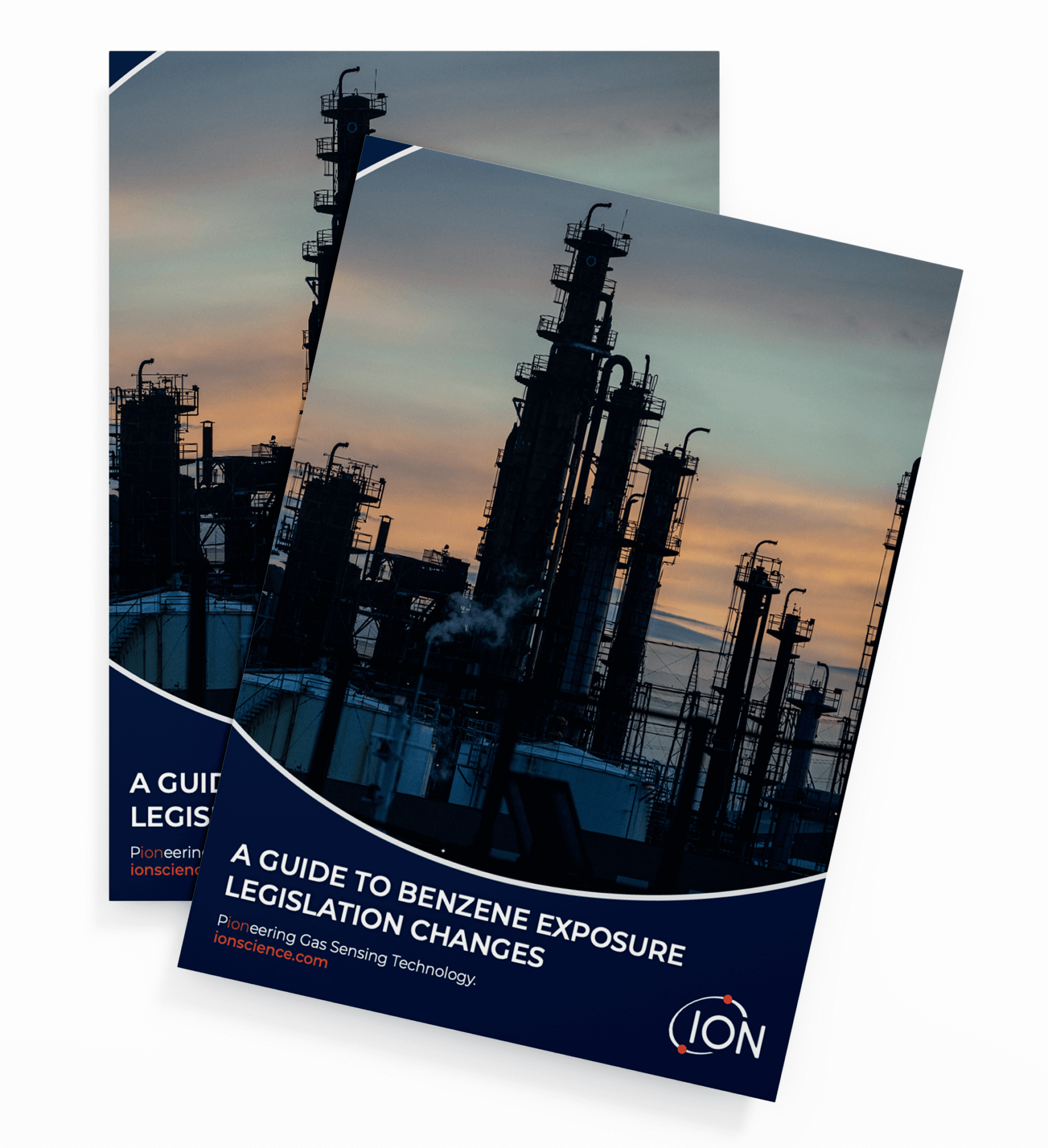
For more information on legislation surrounding benzene exposure, download our Benzene Legislation Guide today.

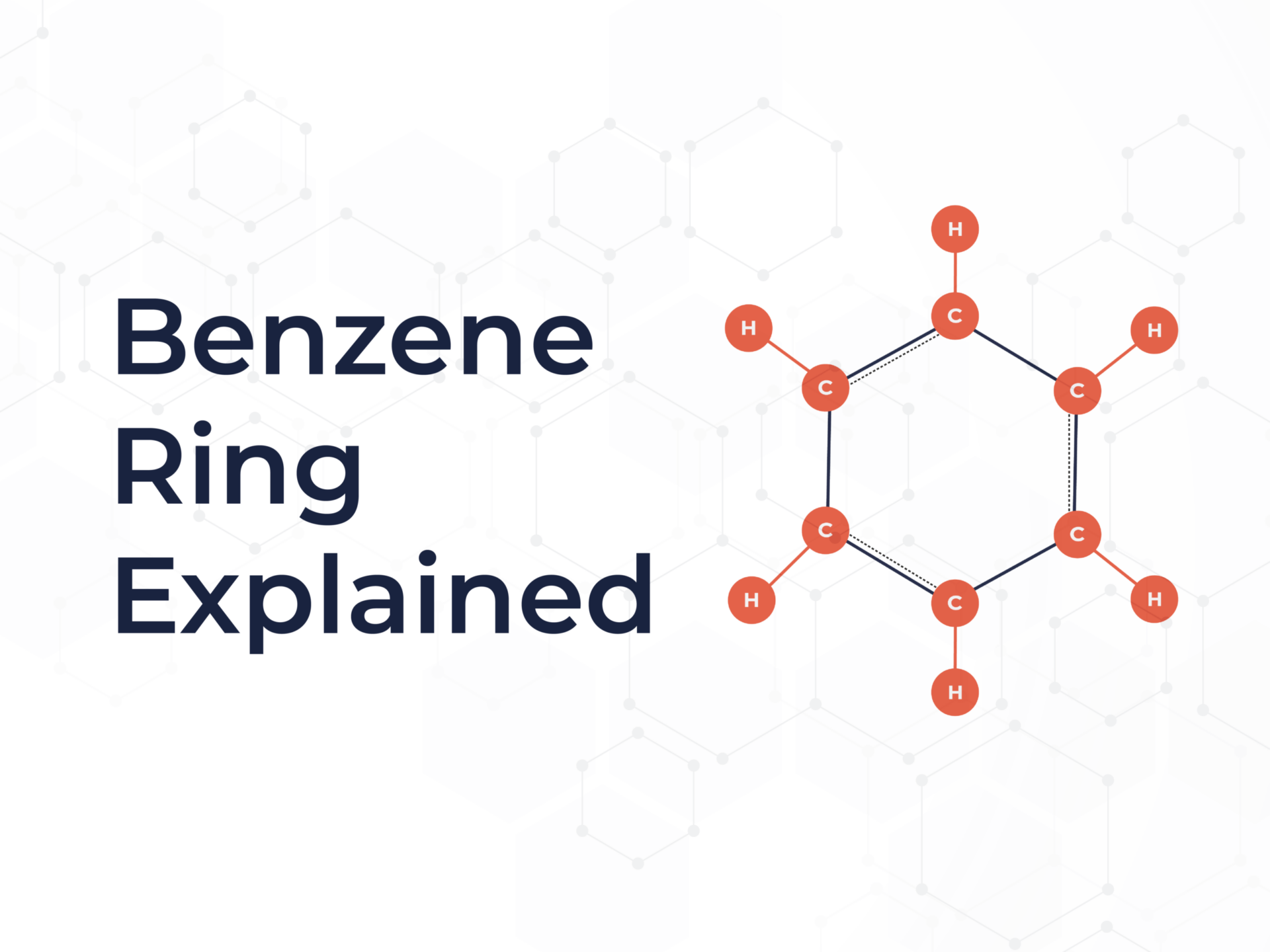
Benzene Ring Explained – Delving into the Unique Structure of Benzene
Introduction:
The world of chemistry is filled with captivating stories of discovery and innovation, and one of its most iconic tales is that of the benzene ring. This seemingly modest hexagonal configuration has etched an enduring impression on the realm of organic chemistry. Within this blog post, we will uncover the essence of the benzene ring, trace its discovery, and contemplate the far-reaching influence it has wielded over the domains of science.
The Benzene Ring: A Unique Structure:
Fundamentally, the benzene ring embodies a hexagonal configuration featuring six carbon atoms, with each carbon atom forming a single bond with a hydrogen atom. What distinguishes it from typical hydrocarbons is the alternating sequence of single and double bonds connecting these carbon atoms. This alternating bonding arrangement constitutes the fundamental aromaticity and stability intrinsic to the benzene ring.
The Discovery of the Benzene Ring:
The discovery of the benzene ring is a tale that revolves around the brilliant mind of Friedrich August Kekulé, a German chemist who lived in the 19th century. During the mid-1800s, the structure of benzene, a compound extracted from coal tar, confounded chemists. While they understood its composition—comprising six carbon and six hydrogen atoms—the arrangement remained an enigma.
Kekulé’s Dream:
According to legend, in 1865, Kekulé experienced a pivotal moment while sleeping by a fireplace. Within his dream, he witnessed atoms in a graceful dance, forming a serpentine structure. Remarkably, this serpent had its tail enclosed in its mouth, resulting in a closed ring shape. Upon awakening, Kekulé had a profound revelation: the structure of benzene resembled a hexagonal ring. This visionary dream marked a ground-breaking moment in understanding the essence of the benzene molecule.
Aromaticity and Stability:
Kekulé’s proposition illuminated the stability of benzene. Instead of featuring the anticipated arrangement of three single and three double bonds, benzene’s electrons exhibit a distinctive quality – they are delocalised. In essence, this signifies that the six pi electrons, typically linked with the double bonds, are not restricted to specific carbon-carbon pairs; rather, they are evenly dispersed throughout the entire ring. This phenomenon of electron delocalisation bestows an exceptional stability upon the molecule, ultimately giving birth to its aromatic nature.
Impact on Chemistry and Industry:
Kekulé’s finding brought about a paradigm shift in the realm of organic chemistry. The introduction of the benzene ring fundamentally altered the landscape, establishing itself as the cornerstone for the examination of aromatic compounds and their reactivity. Furthermore, it yielded substantial real-world utility in the industrial sector, where benzene derivatives assumed pivotal roles in the manufacture of plastics, synthetic rubber, dyes, pharmaceuticals, and a multitude of other products.
Conclusion:
The benzene ring, characterised by its graceful hexagonal configuration and distinctive aromatic attributes, stands as a defining juncture in the annals of chemistry. Friedrich August Kekulé’s revelation regarding it heralded an era of boundless opportunities, fundamentally altering our comprehension and manipulation of molecules. Emerging from the realm of dreams to ground-breaking revelations, the benzene ring perseveres as an enduring emblem of scientific exploration and ingenuity.
Basics of Benzene:
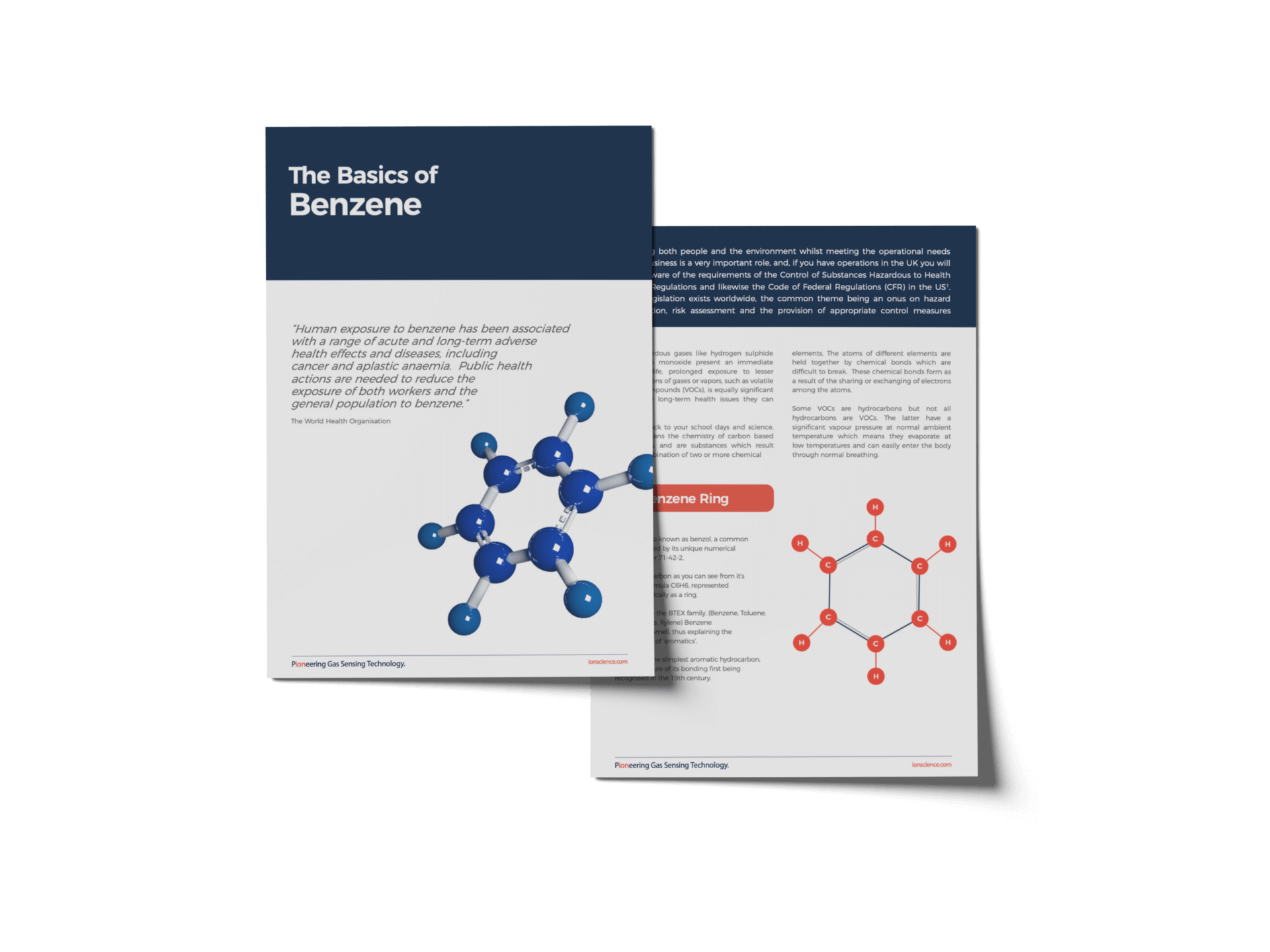
The basics of detecting benzene guide which can be downloaded below provides the reader with an in-depth balance of knowledge covering the main properties, exposure and detection of benzene.
Download ‘Basics of Benzene’ guide


Due to advanced PID Sensor technology, safety hazards associated with Li-ion battery storing and usage can be mitigated, allowing safety measures to be implemented.
Sensitive photoionisation detection (PID) sensors are able to detect potential problems before they occur in the manufacture and use of Li-ion batteries and the enormous variety of devices that use rechargeable batteries. With our ever-evolving digital age, the safe utilisation of Li-ion batteries is of paramount importance to manufacturers and customers.
The risks posed by Li-ion batteries have been highlighted by a number of high-profile incidents hitting mainstream media. Famously, in 2016, around 2.5 million mobile phones were recalled after complaints of overheating and exploding batteries. Extensive investigations revealed insufficient insulation material within the batteries and a design that did not provide sufficient space to safely accommodate the batteries’ electrodes were the main catalysts for these incidents. As a result of the magnitude of this problem, and the global publicity which ensued, demand grew for sensing technology that can detect faulty Li-ion batteries, both during production and operation.
The main safety concern associated with failing Li-ion batteries is the ignition of the battery cell. Not only does this pose an immediate acute (short-term) hazard to individuals, but over long periods of time can cause the emission of toxic gases. These gases include volatile organic compounds (VOCs), meaning sensitive VOC sensors can be used to check the condition of these batteries – either within portable detectors or in process/plant monitoring equipment.
The anode in rechargeable Li-ion batteries is typically graphite, the cathode is a metal oxide, and the electrolyte is usually a lithium salt in a (flammable) organic solvent. This electrolyte includes compounds such as ethyl methyl carbonate (EMC) which is known to be among the gases emitted by a faulty Li-ion battery. Conveniently, EMC can be detected by ION Science’s PID, so the developers of monitoring systems and equipment are able to design technologies that utilise ION’s MiniPID sensors.
The RFs for VOCs commonly used in Li-ion battery electrolytes are presented in Table 1: Evaluation of chemicals used in lithium-ion batteries.
|
VOC |
Boiling Point oC |
RF |
Sat. vapour pressure @ 25 oC bar |
Prospective maximum response, ppm (IBE) |
Measured spike response, ppm (IBE) |
|
Dimethyl carbonate |
91 |
65 |
0.07 |
1000 |
80 |
|
Ethyl methyl carbonate |
107 |
18 |
0.035 |
2000 |
240 |
|
Diethyl carbonate |
127 |
7.5 |
0.015 |
2000 |
390 |
|
Vinylene carbonate |
162 |
3.5 |
0.0033 |
1000 |
480 |
|
Butylene carbonate 1,2- |
238 |
18 |
0.0002 |
1 |
10 |
|
Propylene carbonate |
242 |
15 |
0.0002 |
1 |
80 |
|
Ethylene carbonate |
243 |
>50 |
0.0003 |
0.5 |
<1 |

Due to their specificity, PID sensors are the most commonly employed technology for the detection of VOCs, and ION’s MiniPID range includes the most sensitive PID sensor in the world, which makes it ideal for the detection of trace leaks from faulty Li-ion batteries.
Summarising, Peter Morris from ION Science says:
“Prospective customers for our PID sensors in Li-ion battery applications include the developers of portable instruments, as well as the designers of monitoring systems for processes within battery manufacturing, as well as in the manufacture of EVs, e-bikes, laptops, tablets, phones and many others.”

Contact us today
To discuss with the sensing team how we’re reducing risks and protecting lives in the electric vehicle, e-bike, and electronics industries and how we can support you:

Gases found within Pharmaceutical and Bioanalytical Laboratories
There are a wide variety of gases found within a pharmaceutical or medical laboratory. Many have no taste, colour or smell, which makes it difficult to tell if a gas leak is present. A gas leak from a cylinder or fixed pipe gas system poses a series risk that can cause a potentially fatal incident or hazard within a laboratory environment.
The pharmaceutical industry is one of the world’s fastest growing industries. Most of the sales revenue it generates is then reinvested in the area of research and development of new products. Research and development uses a wide range of speciality gases and equipment. Analytic instruments such as gas chromatographs, liquid chromatographs and spectrometers all rely on the appropriate level of gas delivery to operate effectively.
These pharmaceutical and medical gases are manufactured specifically for the medical, pharmaceutical manufacturing, and biotechnology industries. They are frequently used to synthesize, sterilize, or insulate processes or products which contribute to human health.
Pharmaceutical gases are also inhaled by patients in a technique known as gas therapy. Gases used for human healthcare are strictly controlled by both legislation and industrial standards so as to not impair human physiology.
Gases found within a laboratory
Helium
Helium (He) is a very light, odourless and tasteless gas. It is also one of the 6 noble gases (helium, neon, argon, krypton, xenon and radon), so called because they do not react with other elements and therefore cannot bond with other atoms to form complex compounds. This gives it a strong safety profile and a potential usage in multiple applications. Due to their unreactive status Helium is often used as a carrier gas in laboratories. Helium has many uses beyond its most common one to fill balloons and its role within the pharmaceutical and biotechnology sector is invaluable. It is most widely used in the laboratory in the cooling of magnets inside MRI machines however it is also used across a large range of medical areas including respiratory, cardiology, radiology and cryology functions.
Argon
Argon (Ar) is also a noble gas with non-reactive properties. In addition to its well-known use in neon lights it is also sometimes used in the medical and biotechnology sectors. It is the preferred inert gas for use within Schlenk lines and glove boxes in cases where nitrogen may react with reagents or apparatus and can also be uses is the carrier gas in gas chromatography and electrospray mass spectrometry. In pharmaceuticals and medicine it can also be used in packaging where nitrogen may conflict and also in cryosurgery and in lasers used for vascular welding and correcting eye defects.
Nitrogen
Although not a noble gas like Helium or Argon Nitrogen (N) is also commonly used in pharmaceutical industry due to is relatively non- reactive properties in many different processes and applications. Laboratories primarily to control the atmosphere for highly sensitive equipment and procedures. Nitrogen gas is applied to control oxygen levels, humidity, and temperature in lab equipment including cell incubators, dry boxes, glove boxes, and mass spectrometers.