
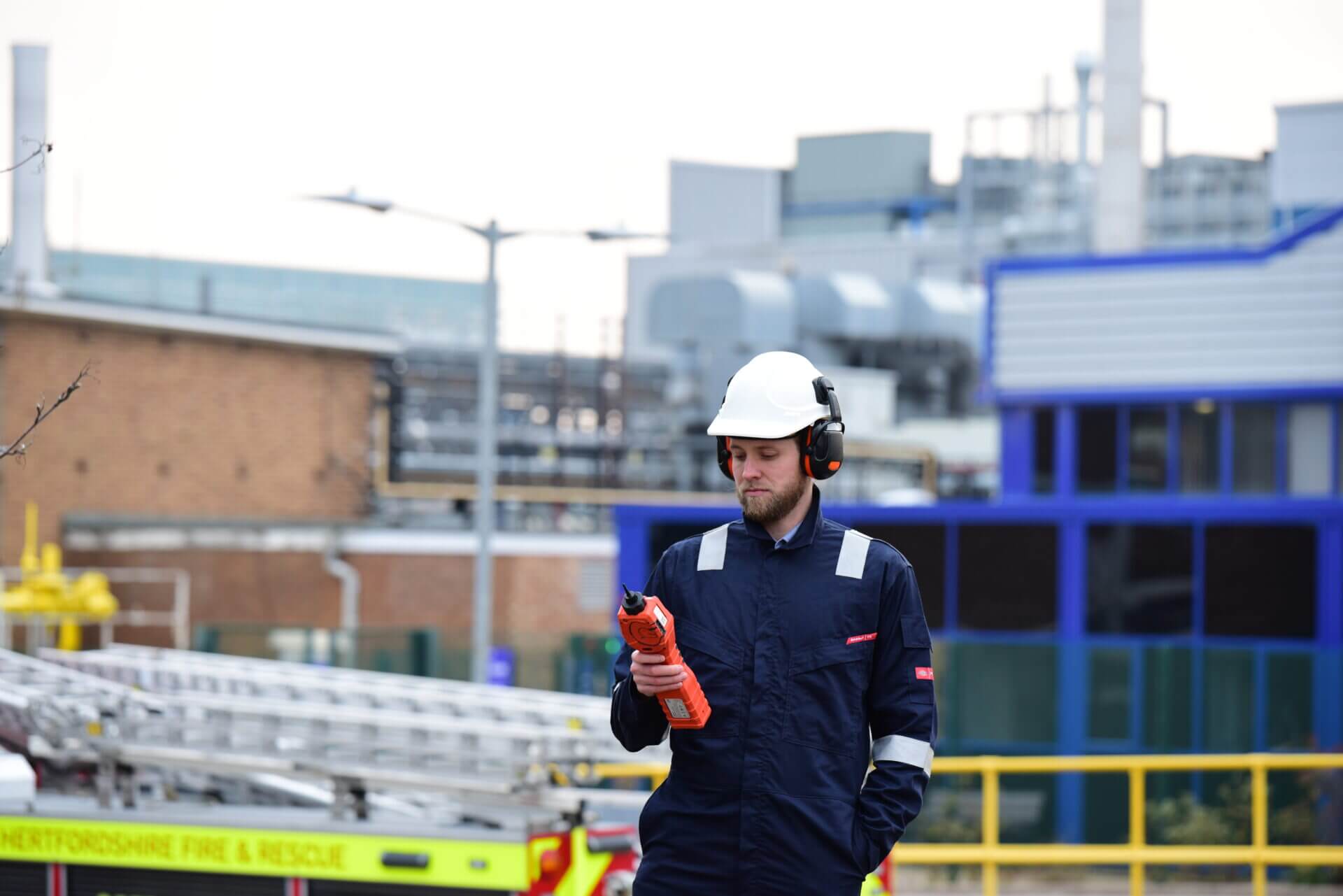
Evidence from EU-OSHA and Implications for Workplace Monitoring
Introduction: Scale of the Occupational Cancer Risk in Europe
Occupational exposure to carcinogenic substances remains a major contributor to work-related cancer across Europe. Data from the European Agency for Safety and Health at Work (EU-OSHA), through the Worker’s Exposure Survey (WES), confirms that volatile and gaseous chemical agents, including benzene, formaldehyde and ethylene oxide, are among the most frequently encountered occupational cancer risk factors in European workplaces.
These substances present a heightened risk because their volatility allows them to become airborne, creating inhalation hazards that are often invisible, intermittent and difficult to control without effective monitoring. As a result, managing exposure to volatile and gaseous carcinogens increasingly depends on real-time detection, exposure awareness and data-driven management.
This article analyses WES findings relating specifically to volatile and gaseous carcinogens, contextualises their documented health risks using evidence from the WHO, IARC, NTP and ChEBI, and explores the implications for occupational health management – particularly the growing role of workplace gas monitoring technologies.
Read our findings:

Defining Volatile and Gaseous Carcinogens in the Workplace
EU-OSHA defines its chemical exposure scope as follows:
“WES estimates probable exposure of workers during the last working week to 24 known cancer risk factors, including industrial chemicals, process-generated substances and physical risk factors.” 1
Within this framework, volatile liquids and gaseous chemicals are of particular concern because they readily disperse into workplace air, leading to inhalation exposure even when handling appears controlled.
Volatile and Gaseous Carcinogens Identified in the WES
Solvents
- Benzene (CAS 71-43-2)
- Trichloroethylene (CAS 79-01-6)
These substances are characterised by their ability to volatile under normal working conditions, making airborne exposure a persistent occupational hazard.
Industrial Chemicals
- Ethylene Oxide (CAS 75-21-8)
- Formaldehyde (CAS 50-00-0)
- 1,3-butadiene (CAS 106-99-0)
- Diethyl Sulfate (CAS 64-67-5)
- Epichlorohydrin (CAS 106-89-8)
Prevalence of Exposure Across the European Workforce
WES data shows that volatile and gaseous carcinogens rank among the most commonly encountered cancer risk factors:
“The most frequently assessed occupational exposures among the 24 cancer risk factors considered in the survey were: solar UV radiation, diesel engine exhaust emissions, benzene, respirable crystalline silica and formaldehyde.” 1
This places benzene and formaldehyde among the most widespread carcinogenic exposures across European industries, reinforcing the scale and systemic nature of the risk.
Why Volatility Increases the Monitoring Challenge
The WES findings highlight that exposure to volatile and gaseous carcinogens:
- Occurs across multiple sectors
- Often involves co-exposures rather than isolated substances
- Fluctuates significantly in concentration over time
Because these substances are airborne, invisible and dynamic, traditional periodic sampling may fail to capture peak exposure events. This makes continuous, or real-time monitoring a critical component of effective occupational health management.
Implications for Occupational Health and Workplace Safety
The prevalence and variability of volatile carcinogenic exposures reinforce the need for:
- Enhanced exposure awareness
- Robust risk assessment frameworks
- Engineering and procedural controls supported by reliable detection data
Without effective monitoring, workers may be unknowingly exposed to hazardous concentrations that exceed safe thresholds.
Monitoring Considerations and the Role of ION Science
The volatile and gaseous substances identified in the WES share characteristics that complicate exposure control but make them well-suited to instrument-based detection. Real-time gas monitoring provides immediate insight into workplace atmospheres, enabling faster intervention and informed decision-making.
ION Science offers a range of wearable, handheld and fixed gas detectors designed to support occupational safety strategies by measuring a broad spectrum of volatile and gaseous substances, including those highlighted in the WES.
By delivering timely, actionable data, these technologies help organisations improve exposure awareness, implement preventative controls and protect workers in environments where carcinogenic gases and vapours are present.
Download the full guide
Ready to enhance your occupational safety?
Complete the form below and our team will be in touch.
References
- European Agency for Safety and Health at Work (EU-OSHA)
Occupational cancer risk factors in Europe – Overview of the findings of the Workers’ Exposure Survey (WES)
- World Health Organization (WHO)
Exposure to benzene: a major public health concern
- International Agency for Research on Cancer (IARC)
IARC Monographs, Volume 88: Formaldehyde
- National Toxicology Program (NPT)
Report on Carginogens, Fifteenth Edition
- Chemical Entities of Biological Interest (ChEBI)






 United Kingdom


 USA
USA France
 India
India China
China Italy
Italy Germany